

Understanding the ACFE CFE-Law Exam: Complete 2026 Overview
Look, real talk here. If you're serious about fraud examination, you can't ignore the legal side. The CFE Law exam isn't some box-checking exercise. It's the section that keeps you from screwing up investigations in ways that could sink an entire case. Understanding fraud schemes is great, but if you don't know what evidence is admissible or how criminal vs civil fraud liability works, you're basically walking through a minefield blindfolded. I mean, that's just reality.
The Certified Fraud Examiner Law section is one of four parts of the full CFE credential offered by the Association of Certified Fraud Examiners. It tests your grasp of fraud-related legal concepts, rules of evidence for fraud cases, and the legal procedures you'll need when conducting investigations. This isn't about becoming a lawyer. It's about understanding the legal framework well enough to work alongside attorneys, law enforcement, and compliance teams without accidentally contaminating evidence or violating someone's rights.
What the Law section actually covers
The CFE Law exam digs into criminal vs civil fraud liability, which honestly trips up tons of people who come from accounting backgrounds. You need to understand legal elements of common fraud offenses. Not just that something feels fraudulent, but what prosecutors or civil attorneys need to prove. The exam tests investigations and legal procedures, so you're looking at how to conduct defensible interviews, how to document findings properly, and when to involve counsel versus when you can proceed independently without creating liability issues for everyone involved.
Rules of evidence? Heavy coverage.
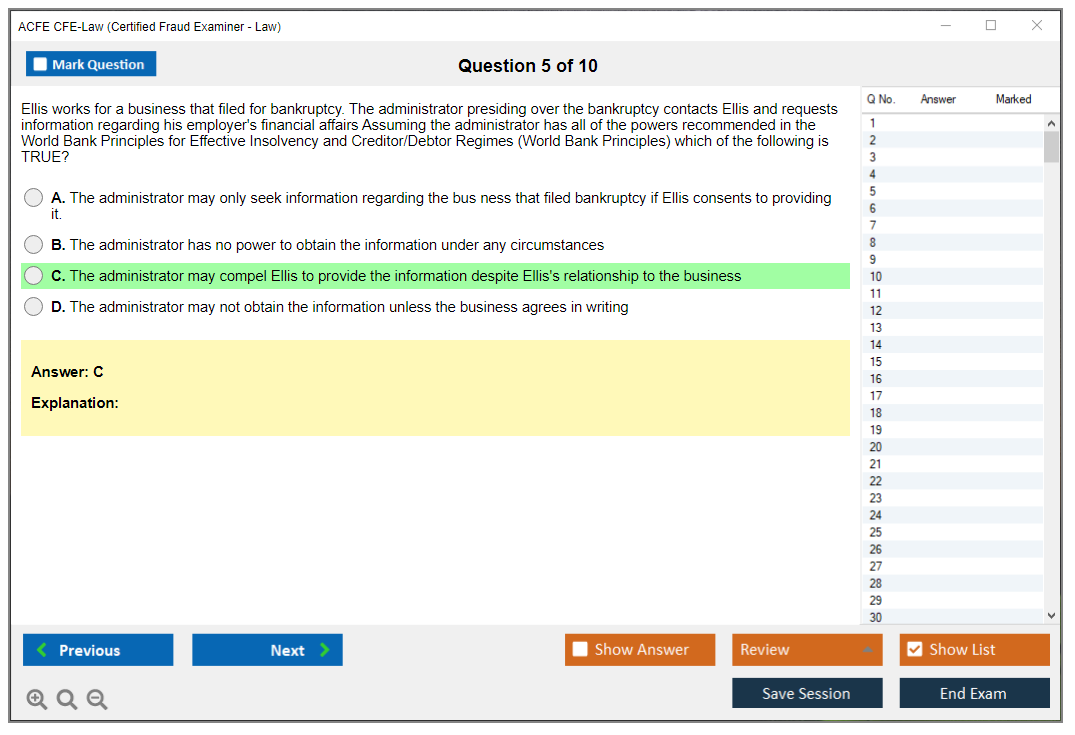
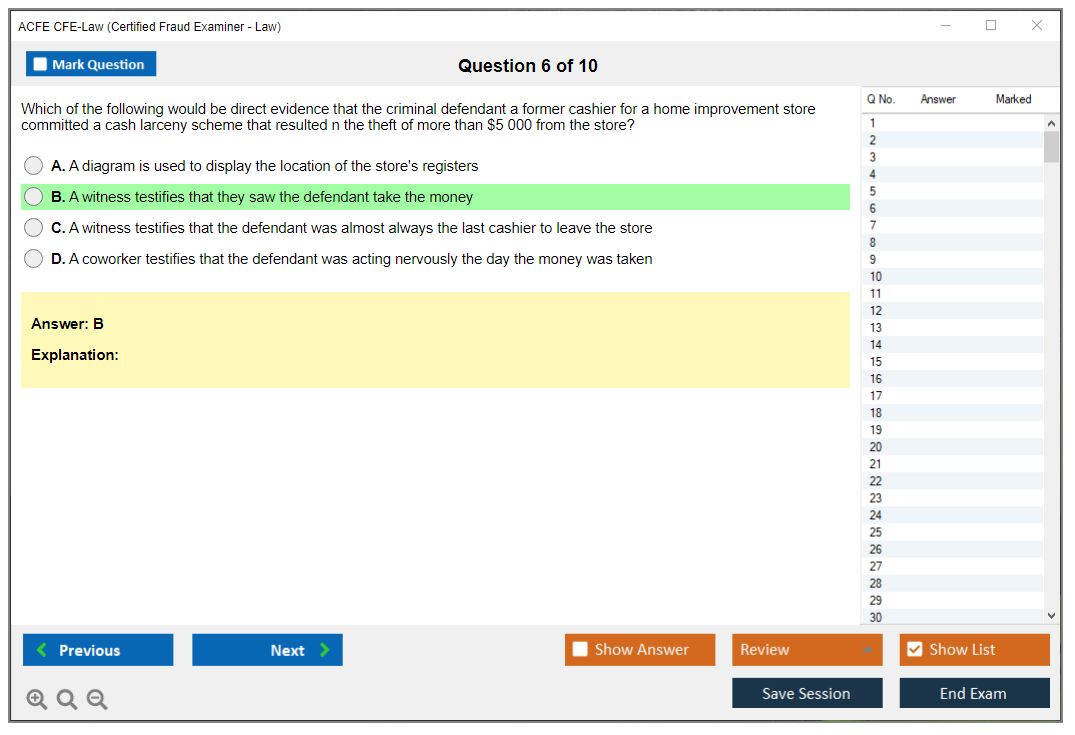
What can you actually use in court? How do chain of custody requirements work? What's hearsay and when does it matter? These questions come up constantly in scenario-based questions where you're analyzing real-world fraud situations and determining the best course of action within legal constraints.
Who needs this credential anyway
Internal auditors investigating fraud allegations are obvious candidates. Same with forensic accountants who prepare evidence packages for litigation. You need to know what attorneys will actually be able to use. Law enforcement officers who handle financial crimes often pursue the full CFE certification to complement their existing training, and the Law section tends to be easier for them since they already work within legal frameworks daily.
Loss prevention professionals in retail and corporate settings benefit hugely. The thing is, I've seen too many internal investigations go sideways because someone didn't realize they'd crossed a line into areas requiring legal counsel.
Risk management consultants advising on fraud prevention programs also need this knowledge to make sure their recommendations don't create legal exposure.
Anyone pursuing the complete CFE credential has to pass all four sections. That includes CFE-Financial-Transactions-and-Fraud-Schemes, CFE-Investigation, and CFE-Fraud-Prevention-and-Deterrence. You can tackle them in any order, but the Law section provides foundational knowledge that makes the Investigation section make more sense.
How this fits into the bigger CFE picture
Just one quarter, honestly. The CFE Law exam is just one quarter of the full certification, but it's the piece that keeps everything else on solid ground. You can take sections in whatever sequence works for your background and schedule. All four must be passed within your eligibility period, which starts after ACFE approves your application based on education and experience requirements.
The Law section addresses the legal framework for fraud examination while the other sections handle schemes, investigation techniques, and prevention strategies. Think of it this way: CFE-Financial-Transactions-and-Fraud-Schemes teaches you what fraud looks like. Investigation teaches you how to find it. Prevention teaches you how to stop it. And Law teaches you how to handle it without getting sued or losing the case, which matters way more than people realize until they're sitting in a deposition explaining why they didn't follow proper procedures. I actually had a colleague once who ignored the legal side completely, figured his accounting background was enough. That ended badly when opposing counsel shredded his evidence collection methods in about fifteen minutes flat.
What the exam format looks like
Multiple-choice questions dominate. You'll see scenario-based questions requiring analysis of fraud situations where you need to identify the correct legal principle or procedural step. Questions cover both U.S. and international legal principles, though there's a U.S. focus.
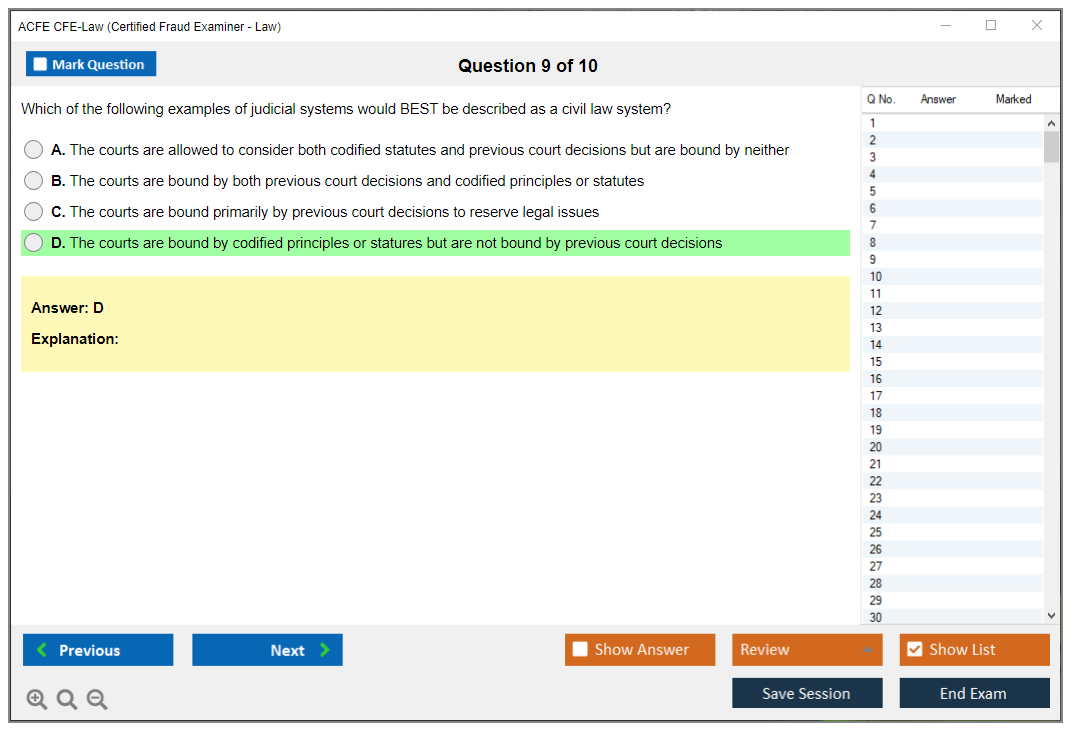
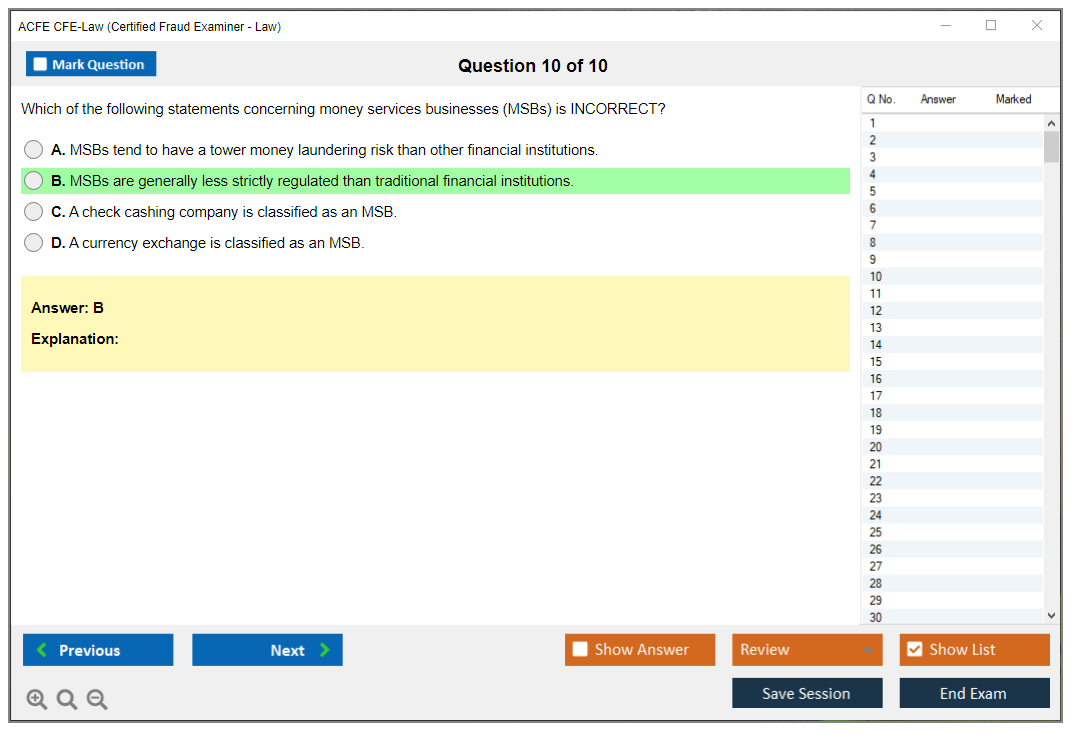
The exam tests knowledge recall. Can you identify the legal elements of embezzlement? It also tests practical application. What should you do when a witness invokes their Fifth Amendment rights during an internal investigation? There's heavy focus on rules of evidence for fraud cases and procedural requirements that protect both the organization and the rights of individuals under investigation.
Not gonna lie, the scenario questions can be lengthy. You'll read a paragraph describing an investigation situation, then answer questions about what actions are appropriate from a legal standpoint. These test whether you actually understand how to apply legal concepts rather than just memorizing definitions. Wait, I should clarify. Rather than just regurgitating textbook answers that sound good but don't work in messy real-world situations.
Why this isn't just another legal exam
The CFE Law exam is not a replacement for a law degree or bar exam. Period. It's focused on fraud-related legal concepts rather than general law practice. If you're thinking this will let you practice law, stop right there. It won't and that's not the point.
The focus is practical application for non-attorneys working in fraud examination. Most CFE candidates aren't lawyers and never will be. This exam teaches you enough to work within legal systems, recognize when you need to loop in counsel, and understand what attorneys are talking about when they discuss your cases.
This credential complements rather than competes with legal credentials. Attorneys pursuing CFE certification sometimes find the Law section easier due to their background, but the other sections still challenge them. Conversely, accountants and auditors often struggle more with Law but excel at Financial Transactions.
What's changed heading into 2026
The ACFE regularly updates content, and the 2026 CFE Law exam objectives reflect recent changes in fraud prosecution approaches. There's more focus on cybercrime and digital evidence rules. How do you authenticate electronic records, handle cloud-stored data, and deal with cryptocurrency trails?
Coverage of international fraud laws and cooperation matters more now than five years ago. Cases routinely cross borders, and you need to understand jurisdictional issues and mutual legal assistance treaties at a basic level. Greater attention to privacy laws affecting investigations reflects GDPR, CCPA, and similar regulations that constrain what investigators can do with personal information collected during fraud examinations without exposing organizations to regulatory penalties or civil liability.
The exam content fits with current anti-fraud laws and regulations, so studying outdated materials will hurt you. Make sure whatever ACFE CFE Law study guide you use reflects recent updates.
Career advantages worth considering
Passing the CFE Law exam gives you credibility when working with legal counsel. Attorneys take you more seriously when you understand admissibility requirements and can discuss cases using proper legal terminology. You'll have better understanding of what evidence will actually hold up, which means you waste less time collecting material that can't be used.
Better investigations that hold up under scrutiny.
The certification strengthens your ability to conduct defensible investigations, which protects both you and your organization from liability. ACFE data shows CFEs earn 34% more on average than non-certified fraud professionals. That's substantial. You'll see expanded career opportunities in fraud examination roles that require or strongly prefer the CFE credential.
Recognition as someone who knows fraud-related legal matters opens doors in consulting, expert witness work, and senior compliance positions. Organizations facing serious fraud risks want people who won't accidentally torpedo cases through procedural mistakes.
Where candidates typically struggle
Legal terminology creates problems for non-attorneys. Words like "scienter," "tortious interference," and "voir dire" don't come up in accounting courses. Rules of evidence and procedural requirements demand careful study. You need to understand both criminal and civil contexts since fraud cases can proceed on either or both tracks at the same time.
Jurisdictional variations in fraud laws make things messy. What's required in federal court differs from state courts, and international cases add another layer entirely.
Application of abstract legal concepts to practical scenarios requires critical thinking beyond memorization. And honestly, balancing speed with careful reading of scenario questions trips people up during the actual exam. You can't rush through dense fact patterns without missing details that change which answer is correct.
CFE Law Exam Objectives: Full Content Breakdown
How the Law section is put together
The CFE Law exam is where ACFE checks whether you can think like a fraud examiner who's about to hand a case to counsel or testify. Not vibes. Not "I watched Suits." Actual legal standards, what must be proven, what evidence survives, and what procedures can blow up your whole case if you get sloppy.
ACFE bases this on the official CFE Exam Content Outline, and the domains are weighted. The stuff you'll actually run into in fraud work shows up more. You'll also notice it gets updated as laws and enforcement priorities change, which is annoying when you want a static syllabus, but that's reality. The content aligns to the Body of Knowledge for fraud examiners, and the questions mix knowledge checks with scenario items where one tiny fact changes the outcome. Read the prompts like a contract dispute. Slow. Literal.
What you'll actually be tested on
Look, the objective list sounds broad because it is. But the Law section usually clusters into a few repeatable buckets: fraud-related legal concepts, criminal vs civil fraud liability, elements of offenses, rules of evidence for fraud cases, and then the "how the machine works" parts like investigations and legal procedures, interviews, reporting, and cross-border headaches.
Some topics get more love because they're the ones that decide whether a case moves forward. Others show up as terminology checks. Random definitions, short fact patterns that trip you up on word choice alone. You'll want an ACFE CFE Law study guide that tracks the outline closely, because "general legal knowledge" isn't the same thing as "what ACFE asks." That's the trick.
Legal elements of fraud offenses (where the points live)
This is the big one.
The Certified Fraud Examiner Law section keeps coming back to "what must be proven." If you can't articulate elements, you can't support charges, claims, or even a clean referral package.
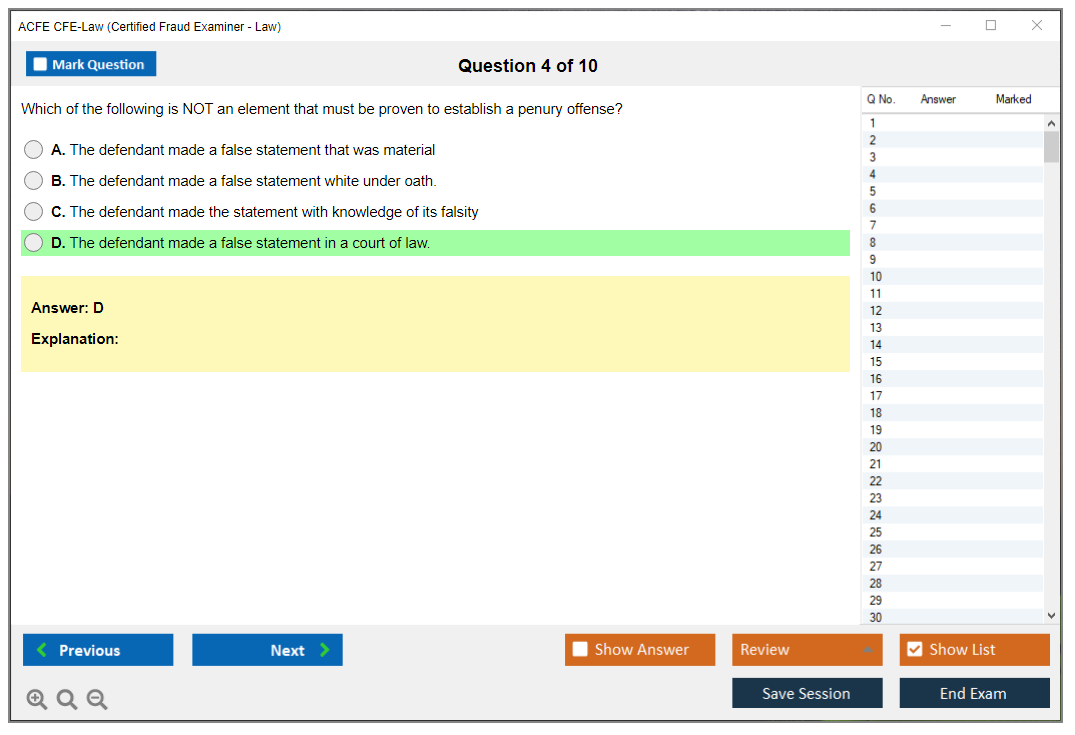
Core elements commonly tested include material misrepresentation and intent to deceive. Material means it matters to the decision, not that it's dramatic. Intent means the person meant to mislead, not that they were careless, and that difference is where exam questions love to mess with you.
Reliance and damages are the other two that people half-remember. Reliance is the victim acting because of the false statement, and damages are the loss tied to the conduct. Causation matters. Proximate cause comes up when the chain of events is messy and the defense tries to blame something else.
Also, expect comparison questions: fraud vs theft vs embezzlement vs larceny. I mean, yes, they're all "took money," but legally they split based on possession, how it was taken, and whether the property was entrusted. Conspiracy and aiding/abetting liability show up too, especially in group schemes where not everyone touched the cash. Attempt and other inchoate crimes matter when the plan was underway but incomplete. And you'll see specific intent vs general intent. Fraud's usually specific intent, and that changes what the prosecutor has to show.
Civil vs criminal liability (same facts, different game)
People mix this up under stress.
Criminal fraud needs proof beyond a reasonable doubt. Civil fraud is usually preponderance of the evidence, basically "more likely than not." That one shift changes everything about risk, settlement pressure, and how you write your report.
Remedies split too. Criminal's imprisonment, fines, restitution. Civil's damages, sometimes punitive, sometimes treble damages depending on the statute, and equitable remedies like disgorgement. Parallel proceedings are fair game: civil suit running while a criminal investigation's active. That creates strategy issues, like discovery in civil being used to fish for information the criminal side would rather keep quiet.
Double jeopardy protections apply to being tried twice criminally by the same sovereign, but don't assume it blocks everything. Statutes of limitations also vary a lot by claim type and jurisdiction. Pleading requirements and procedure differ too, and that's where fraud examiners get involved. In civil, your work often feeds complaint allegations and damages models. In criminal, your work feeds probable cause, charging decisions, and trial exhibits.
Strategically, criminal's powerful but slower and not guaranteed. Civil can move faster and recover money, but you may be limited by collectability. Your role changes depending on which track the organization chooses. Sometimes you'll build a file that sits in limbo for months waiting for someone else to decide which route to take, which is frustrating but happens more than you'd think.
Evidence rules you can't afford to butcher
If you've ever had a lawyer ask "how do you know this is what you say it is," you've already met authentication.
The exam loves relevance and materiality standards, then drills into whether evidence's admissible and properly supported.
Chain of custody matters for physical and digital items. Who had it, when, how it was stored, whether it could be altered. The best evidence rule shows up with documents, especially when someone tries to testify about what a document said without producing it. Hearsay's constant, and you need to know the major exceptions that show up in fraud work, especially the business records exception and what foundation's required. Not gonna lie, business records questions are sneaky because they test process, not content.
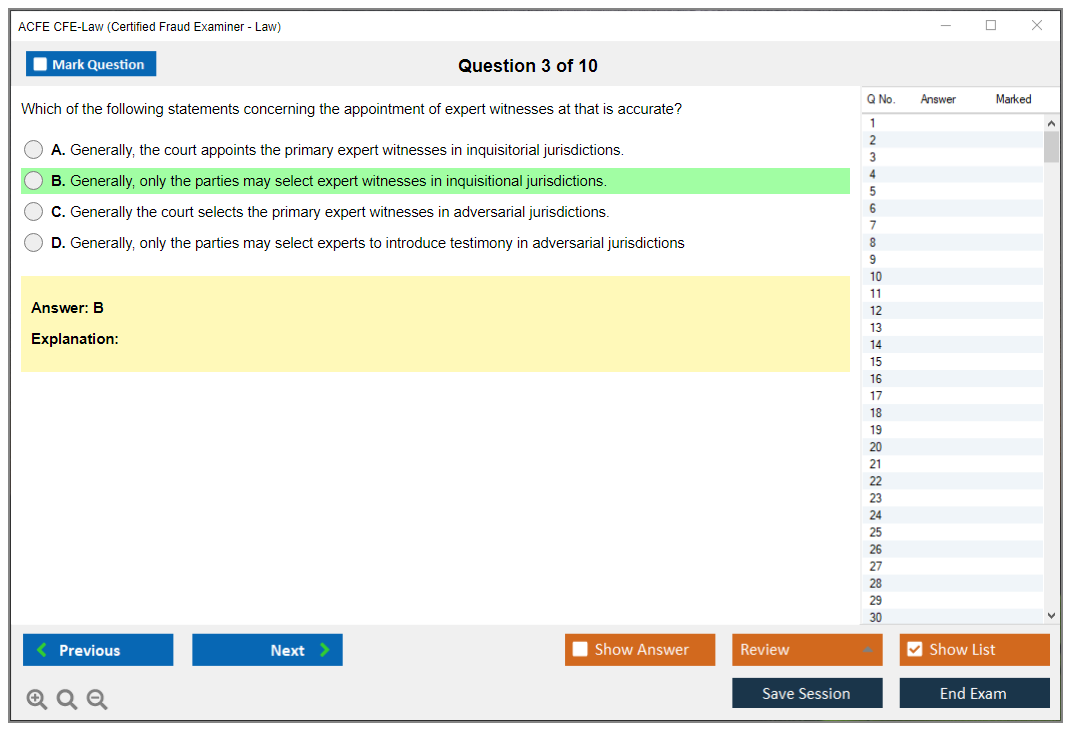
Expert testimony standards matter too. Daubert vs Frye comes up as a gatekeeping concept: is the method reliable, accepted, testable, peer-reviewed, error rate, that sort of thing, depending on jurisdiction. Privilege issues are another landmine. Attorney-client, work product, and self-incrimination. Electronic evidence and digital forensics admissibility's increasingly common, and character evidence rules appear as "can we introduce prior bad acts" style prompts.
Constitutional protections that shape investigations
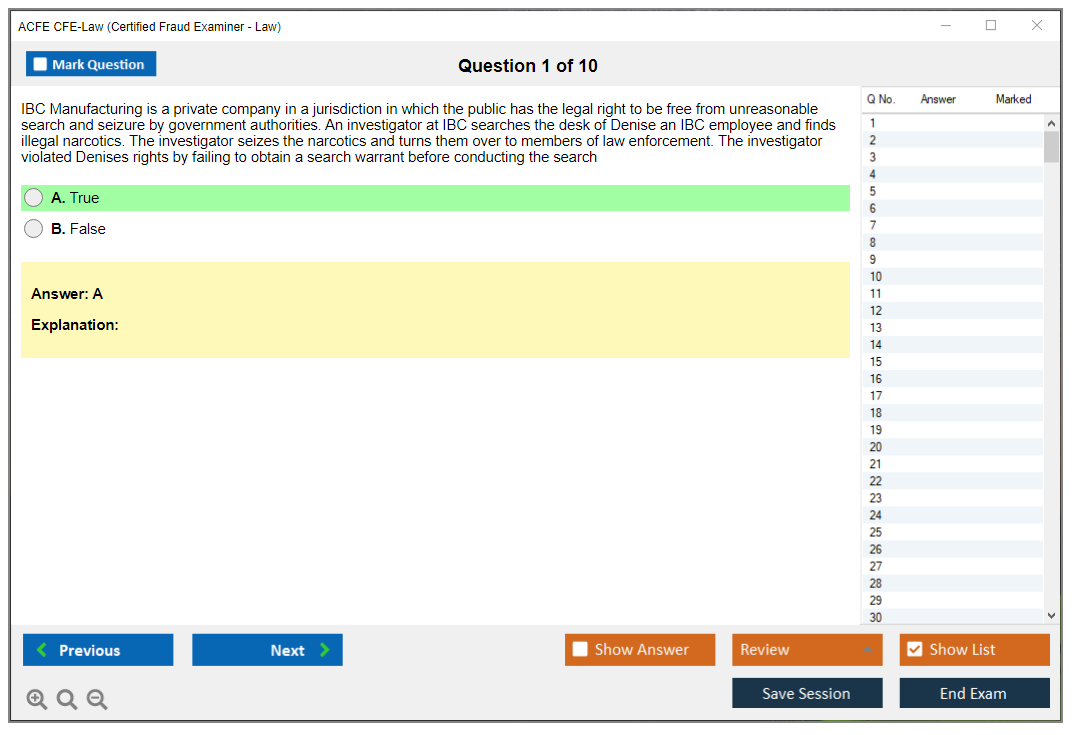
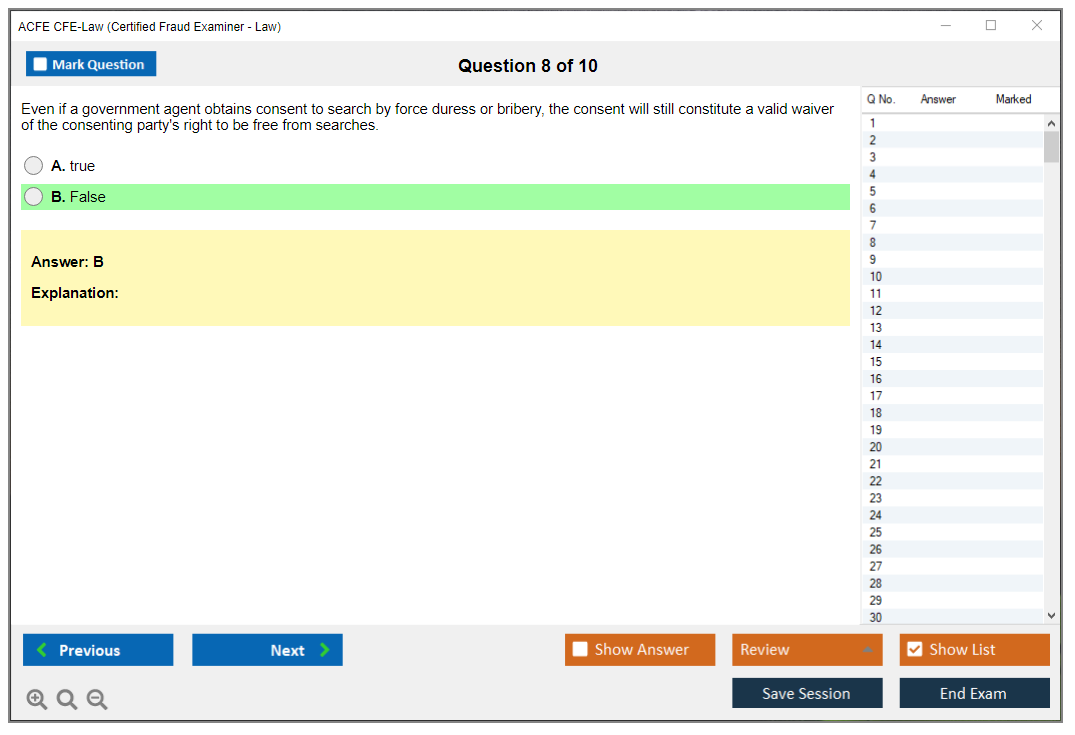
Fourth Amendment search and seizure issues show up whenever government's involved, and ACFE expects you to know the difference between public-sector action and private employer investigations. Warrants apply to the government. Private investigators are different unless they're acting as an agent of law enforcement, and scenario questions will hint at that relationship.
Fifth Amendment privilege against self-incrimination matters in interviews and custodial settings. Miranda warnings hinge on custody plus interrogation. Sixth Amendment right to counsel attaches after formal proceedings begin, so timing matters. Due process themes come up around fairness, notice, and government conduct. Workplace privacy expectations are another frequent twist. Who owns the device, what policies exist, and whether the employee had a reasonable expectation of privacy.
Government vs private sector investigations is one of those exam topics that feels academic until you've watched a case get torched because someone tried to "help" law enforcement too directly.
Concepts and terminology that show up everywhere
You'll see actus reus and mens rea, plus scienter, knowledge, and intent flavors that change what must be proven.
Proximate cause and causation analysis show up in damages and reliance. Vicarious liability and respondeat superior matter when an employee commits fraud and plaintiffs want the employer on the hook.
Piercing the corporate veil comes up when someone hid behind an entity. Joint and several liability's common in multi-defendant schemes. Restitution, disgorgement, treble damages, statute of frauds, basic contract law, and tort foundations all appear as "do you recognize what this is" checks.
Statutes and regulations you should recognize on sight
The anti-fraud laws and regulations bucket is where you need familiarity more than memorization of every subsection.
Mail and wire fraud (18 U.S.C. §§ 1341, 1343) are staples. Bank fraud and financial institution fraud laws come up. Securities fraud's big too, including Rule 10b-5 and Securities Act violations.
Healthcare fraud and the False Claims Act show up in compliance-heavy roles. Also computer fraud and abuse laws, identity theft and aggravated identity theft, money laundering and structuring, RICO, tax fraud and evasion, and international conventions. I'd learn 2 to 3 deeply, like mail/wire fraud and FCA, and know the rest at recognition level. The exam often tests "which statute fits this fact pattern" more than "quote the statute."
Procedures: from allegation to courtroom
This part's very "process."
Initiating investigations, preliminary assessment, preserving evidence. Search warrants versus subpoenas. Grand jury basics and secrecy rules. Arrest procedures and probable cause. Indictment vs information. Arraignment and plea negotiations. Discovery obligations and Brady material. Motion practice. Trial procedures and what it means when a fraud examiner testifies.
A lot of candidates skip this because it feels like criminal justice trivia. Don't. Scenario questions live here, especially around timing and who has what authority.
Interviews, reporting, and cross-border issues
Voluntary vs custodial interviews matter because they drive Miranda and coercion issues.
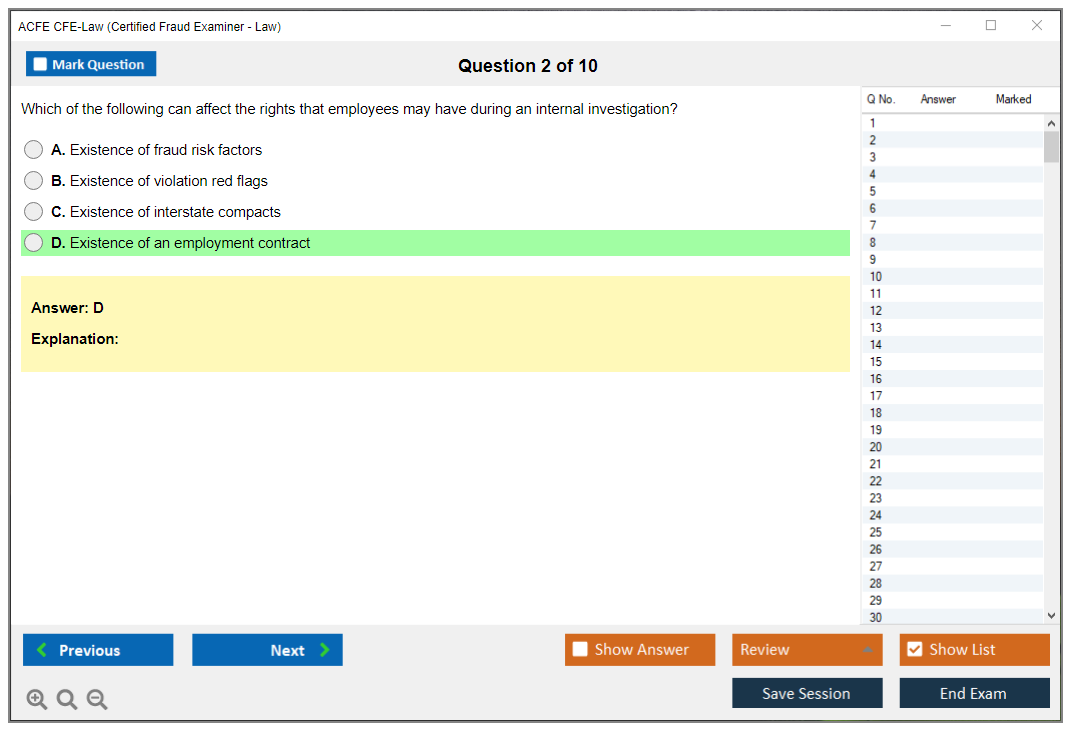
Recording rules vary by one-party vs two-party consent states. Employee rights in workplace investigations are fair game, including union representation rights under Weingarten. Documenting interviews to preserve admissibility's practical, and the exam treats it that way.
On reporting and referral, expect mandatory reporting concepts like suspicious activity reports, confidentiality rules, defamation risks, and qualified privilege. Referral to law enforcement and coordination with prosecutors is part of the job, and ACFE tests the basics. Evidence preservation for litigation's also in-scope.
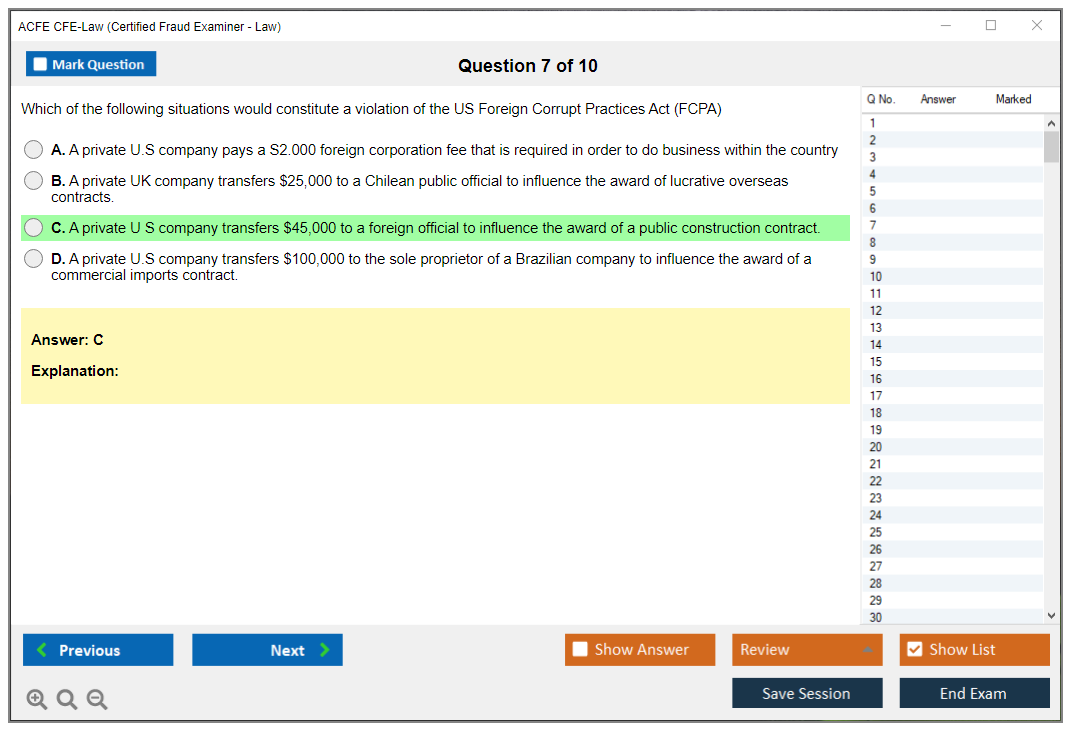
Internationally, jurisdiction, extradition, MLATs, FCPA, conflicts of law, and data privacy like GDPR come up. Not every exam form goes deep, but you should be comfortable with what changes when borders get involved. These questions feel abstract until you're dealing with a witness in another country who won't cooperate.
Passing score, difficulty, cost, and renewal (the stuff people ask)
What's the passing score for the CFE Law exam?
ACFE uses scaled scoring and doesn't publish a simple universal "CFE exam Law passing score" number the way some vendors do, so treat "passing" as meeting ACFE's scaled threshold, then aim higher on practice to be safe.
How hard is it compared to other sections? Candidates without legal exposure find Law the most annoying because the wording's precise and the distractors sound plausible. Investigators often find it easier than Financial Transactions.
What study materials are best? Start with the official ACFE Exam Prep Course, then add CFE Law practice questions and a missed-question log. The best prep's pattern recognition from scenarios, not passive reading.
Cost questions like CFE Law exam cost depend on membership, the CFE Program fee, prep materials, and potential retakes. Budget for the whole certification package, not just one section. Most people buy the prep system.
Prereqs and renewal? ACFE has eligibility rules around education and experience, plus ethics. After you're certified, ACFE CFE renewal requirements are basically fees plus CPE on a cycle. Check ACFE's current policy before you plan your year, because they do update details.
If your goal's "how to pass CFE Law," my opinion is simple: map your studying to the CFE Law exam objectives, drill scenarios, and treat evidence and elements like your home base. Everything else hangs off that.
CFE Law Exam Cost: Investment and Financial Planning
Look, if you're serious about the CFE credential, you need to understand the money side upfront. I'm talking real numbers here, not just the exam fee everyone mentions first.
What you're actually paying for when you start
The ACFE doesn't let you just pay an exam fee and call it done. Membership comes first. That's roughly $195 to $250 annually depending on which tier you choose. They've structured it so membership is the gateway to everything else: exam registration, prep materials, the whole deal. You literally can't sit for the exam without active membership, which honestly feels a bit like forced bundling, but whatever.
Student discounts exist. Around $50 yearly if you qualify. Early career rates help recent grads too, which makes sense since you're probably broke coming out of school. But here's the thing: that membership needs to stay active throughout your entire certification path, not just until you pass.
Breaking down the application and registration fees
Once you're a member, you pay a one-time CFE exam application fee of approximately $450 to $500. This covers credential review and processing, plus access to all four exam sections, including the CFE-Law portion we're focused on here. No separate fees per section, which is actually pretty reasonable compared to how some certifications nickel-and-dime you for every little component.
The application stays valid for one year from approval. Extensions might be available for an additional fee, but I wouldn't count on needing one if you plan properly.
Official prep course investment
The CFE Exam Prep Course runs about $795 to $995. It covers all four sections: CFE-Financial-Transactions-and-Fraud-Schemes, Law, CFE-Investigation, and CFE-Fraud-Prevention-and-Deterrence. Digital format includes videos, reading materials, practice questions. The works. Access typically lasts 12 to 18 months with updates included during that window, which beats those courses that lock you out after 90 days.
Print materials cost extra if you want physical books. Some people learn better that way. Bundle discounts sometimes pop up when you register for the exam, so watch for those.
Not gonna lie, the prep course is full but pricey. Whether you need it depends on your background. If you've got legal experience, maybe you can get away with less for the Law section specifically. Then again, I've seen plenty of lawyers fail certification exams in adjacent fields because they assumed their JD would carry them through. Overconfidence kills test scores faster than lack of preparation.
Supplementary study materials worth considering
Additional practice question banks? $100 to $300. Legal reference books and fraud law texts add another $50 to $200. Evidence law study guides might set you back $30 to $100. Flashcard sets are cheaper, maybe $20 to $50.
Online courses and webinars range wildly, $100 to $500 depending on depth and provider. Full review courses if you're really struggling can hit $500 to $1,500. But here's what they don't always tell you: ACFE membership includes tons of free resources. Webinars, publications, networking events. Use them. Seriously.
For the Law section specifically, the CFE-Law Practice Exam Questions Pack at $36.99 gives you targeted practice without breaking the bank. I'd honestly recommend that before dropping hundreds on generic review courses that cover everything superficially instead of drilling deep where you actually need help.
Retake policies you should know about
Your first retake? Typically included in the original registration. After that, you're looking at approximately $100 to $200 per section for additional attempts. No limit on retakes during your eligibility period, but you've got to wait about 30 days between attempts, which can feel like forever when you're anxious to just get it done.
Strategic planning matters here. Sometimes spending an extra month studying beats rushing into a retake. The $150 retake fee might seem small, but it adds up if you fail multiple times. Plus there's the time cost. You're delaying your certification and the salary bump that comes with it.
What the total investment actually looks like
Minimum investment? Around $1,500 to $2,000. That's membership, application, and the basic prep course. No frills.
I'd budget $2,000 to $3,000 for realistic preparation with some cushion. This includes supplementary materials like the CFE-Law Practice Exam Questions Pack and contingency money for a potential retake. Maybe a couple reference books. Premium preparation with specialized courses and tutoring pushes $3,000 to $5,000, which sounds insane until you compare it to law school or an MBA.
Compare that to the average 34% salary increase CFEs see. You're looking at recouping costs within the first year, maybe faster depending on your current compensation and market. The thing is, you've got to actually pass and use the credential properly, not just assume employers will throw money at you automatically.
Ways to reduce your out-of-pocket costs
Employer sponsorship changes everything. Many organizations cover CFE costs as professional development, especially if fraud examination relates to your role. Ask before you pay. Worst they can say is no, but you'd be surprised how many companies have education budgets sitting there unused.
ACFE chapter scholarships and grants exist but aren't widely advertised. Check with your local chapter. Free webinars and study groups through chapters help too. Library resources and interlibrary loan can get you expensive reference books without purchase. Honestly, why aren't more people doing this?
Form a study group and cost-share materials. Five people splitting a $300 question bank beats everyone buying separately.
Tax deductions for professional education expenses might apply. Consult a tax professional, but this stuff often qualifies as unreimbursed employee expenses or business deductions depending on your situation.
Long-term costs beyond passing the exam
Annual ACFE membership renewal continues at $195 to $250. Continuing professional education requirements mean ongoing CPE course costs. Conference attendance adds up. Triennial certification renewal has fees attached.
Some people pursue specialty credentials after the CFE, which means more costs. But the return on investment through career advancement typically justifies it. The salary increase alone usually covers annual membership and CPE within your first paycheck bump, so you're paying for professional development with someone else's money at that point.
How CFE costs stack up against alternatives
The CFE? Cheaper than becoming a CPA or getting law credentials. Way cheaper. It's comparable to CIA, CISA, and similar audit certifications. The value-to-cost ratio for fraud specialization is honestly pretty strong, especially if you're targeting investigative roles rather than general accounting.
Faster completion timeline reduces opportunity costs too. You're not in school for years. Most people finish within 6 to 12 months while working full-time. The specialized knowledge has broad applicability: government, corporate, consulting, law enforcement. That beats getting pigeonholed into one narrow field.
The Law section specifically prepares you for legal aspects of fraud cases, evidence rules, criminal versus civil liability. That knowledge translates directly to job performance, which justifies the investment better than some certifications that test theoretical knowledge you'll never use and forget three months after passing.
Bottom line: budget at least $2,000 for the whole process if you're smart about it. Use the CFE-Law Practice Exam Questions Pack and free resources strategically. Ask your employer to cover what they can. The certification pays for itself fast enough that the upfront cost shouldn't stop you if you're serious about fraud examination as a career path.
CFE Law Exam Passing Score and Performance Standards
Quick picture of the ACFE CFE Law section
The CFE Law exam is one of the four sections you've gotta clear to get the Certified Fraud Examiner credential. No shortcuts here.
The thing is, the Law section is where a lot of otherwise-strong candidates get slowed down. It's less "mathy" than Financial Transactions and more about reading carefully, spotting legal elements, and knowing what actions are allowed during investigations and legal procedures. Terminology matters, like, a lot. That's where people who skim start bleeding points without realizing it until they're staring at a 72% wondering what happened.
If you're already doing fraud work, the content'll feel familiar, but the exam still expects you to know the "why" behind decisions. What makes something criminal vs civil fraud liability? How rules of evidence for fraud cases affect what you can present? What anti-fraud laws and regulations typically cover?
What you're actually tested on
The CFE Law exam objectives usually map to a handful of domains that show up in real casework. Not gonna lie, if you try to memorize random definitions without tying them to scenarios, you'll feel fine in study mode and then get absolutely punched in the face by the questions.
Fraud-related legal concepts show up everywhere. Think intent, misrepresentation, reliance, damages, and all the little legal words that sound similar but aren't interchangeable. Then you get into criminal vs civil fraud liability, which is basically about burdens of proof, remedies, who brings the action, and what "wins" look like in each lane.
Rules of evidence matter here. Documentation and admissibility are a big deal too. Stuff like hearsay concepts, business records, chain of custody, and when documentation's persuasive versus when it's dead-on-arrival because it can't be admitted or authenticated. And yes, there are questions about investigations and legal procedures, like what you should do before referrals, how interviews and reporting can create risk, and what happens once attorneys or law enforcement get involved.
Other topics exist. Specific offenses and regulatory themes. You'll see them. Just don't build your whole plan around trivia. I once spent an entire weekend memorizing specific dollar thresholds for bank fraud reporting, thinking it'd be half the test. Showed up, got maybe one question on it. Meanwhile, I'd skipped practice on witness testimony rules and got wrecked by five questions on that alone. So yeah, priorities matter.
Cost expectations (and why people underestimate it)
People ask about CFE Law exam cost like it's just an exam fee.
Honestly, it's usually a bundle of membership, program fees, prep materials, and sometimes retakes depending on timing and how you study. I mean, nobody plans to retake, but skimping on practice to save forty bucks and then paying retake fees plus lost time is, well, it's a choice people make.
ACFE membership and the CFE program fees are the baseline, then many candidates add the official prep course or other materials. If you learn well from repetition, a question pack can be the best value because it forces you to practice how the exam asks things, not how a textbook explains them. If you want extra reps specifically for this section, CFE-Law Practice Exam Questions Pack is $36.99 and fits nicely as a "daily questions" tool next to your main ACFE CFE Law study guide.
Budget note: If you're the type who schedules too early and hopes adrenaline'll carry you, you might pay more in retakes and lost time than you would've spent on better practice questions up front.
Passing score rules you can't ignore
Here's the clean requirement: the minimum passing score is 75% correct answers. That's the CFE exam Law passing score, and it applies uniformly across all four exam sections, not just Law.
No partial credit. It's multiple-choice. You either get the item right or wrong. Some candidates try to "half-know" their way through by eliminating two options and guessing, and look, that can work sometimes, but it's not a scoring strategy, it's a risk management strategy.
You also have to pass all four sections to earn the CFE credential. Sections can be passed independently and in any order, so if the Certified Fraud Examiner Law section is your weak one, you can either get it out of the way early or build confidence by passing another section first. Both approaches are valid. Just pick one and commit.
Scaled scoring may be applied to ensure fairness across versions. That doesn't mean there's a curve based on who tested that day. It means ACFE can adjust for small differences in difficulty between forms so the standard stays consistent.
How scoring and reporting works after you click submit
You get immediate preliminary results when you finish the exam. That part's nice, because you're not sitting around refreshing your email for a week.
Official confirmation typically arrives within 24 to 48 hours. Score reporting is usually pass/fail with a percentage score, plus diagnostic feedback on domain performance. That feedback is the part people skip, and it's the part you should actually read, because it tells you where to focus if you're thinking about a retake or even if you passed but felt shaky.
No detailed item analysis is provided. You won't get "Question 37 was wrong because.." and honestly you shouldn't expect that from a professional certification exam.
Your score reports live in the candidate portal. Scores are valid indefinitely once a section's passed, so you don't have to "re-pass" Law later just because time passed.
What 75% means in real life
If a section has 100 questions, 75% means you need about 75 correct. Simple.
The twist is the actual number of questions may vary by section, and some questions may be experimental and unscored, meaning they're being tested for future use and don't count toward your result. Which is annoying when you're taking it, but it's standard practice for maintaining exam quality over time.
So what does that threshold represent? Competency, basically. The exam's trying to verify that you can operate safely and effectively with fraud-related legal concepts in professional practice, including recognizing legal risks during investigations and legal procedures and understanding how rules of evidence for fraud cases can make or break a matter.
That 75% line's pretty consistent with other professional certification standards. It's not trying to be impossible. It's trying to be defensible.
Difficulty and calibration (why it feels "hard" without being unfair)
ACFE reviews exam statistics regularly. Questions are validated through psychometric analysis, which is a fancy way of saying they look at performance data to see if items behave like they should, discriminate between prepared and unprepared candidates, and don't introduce weird bias.
Difficulty's maintained consistently across administrations. No curve. No "you did better than the group." You either met the standard or you didn't.
Questions are typically weighted equally unless specified, so don't waste energy trying to guess which items "count more." Focus on accuracy.
Periodic updates happen to keep current relevance, especially around anti-fraud laws and regulations. That's why old notes from someone who tested years ago can be helpful for mindset but sketchy for specifics.
If you don't pass, do this (and don't do the panic thing)
Start with the diagnostic feedback. That's your map.
Then line it up with the CFE Law exam objectives and identify which domains are costing you points. If you're hemorrhaging points on evidence rules, that's actually good news because it's fixable, whereas if you're missing a little bit of everything, you've got a foundation problem that needs more systematic work.
Typically there's a 30-day waiting period before a retake attempt. Use it. Don't just reread. Rebuild your weak spots using active practice: timed sets, review logs, and rewriting the rule in your own words. If evidence rules are your problem, drill scenario questions about admissibility, documentation, and what investigators should do when preserving records.
Consider additional study resources or a review course if your foundation's thin. If your issue's more "I knew it but I rushed," then your fix is pacing and question volume, not more reading. That's where targeted CFE Law practice questions help, and yes, I'll say it plainly: doing more realistic items is usually the fastest way to learn how to pass CFE Law. If you want an extra bank to rotate in, CFE-Law Practice Exam Questions Pack is an easy add without turning your prep into a second job.
No penalty for multiple attempts beyond retake fees. Your ego might feel a penalty. Your credential path doesn't.
Retakes and timing strategy
First retake's often included in the registration fee, with additional retakes available for a supplemental fee. Policies can change, so confirm in your portal, but the strategic idea stays the same.
There's no limit on total attempts during your eligibility window, and you can retake individual sections without repeating passed sections. That's huge. It means you can bank wins.
Timing matters, though. Too fast and you repeat the same mistakes. Too slow and you lose momentum, forget details, and turn this into a six-month cloud hanging over your head. I usually like a focused 2 to 4 week retake plan, heavy on practice and review, light on passive reading.
Target scores that make passing feel boring
Aim for 80 to 85% on practice tests before you schedule.
That buffer covers exam-day stress, tricky wording, and the couple topics you just don't like. I mean, everyone's got that one domain they'd happily never see again, but it's gonna be there anyway, so you might as well get comfortable enough that it doesn't wreck your whole day.
Higher practice scores correlate with passing likelihood, but consistency across domains matters more than one random 92% when you happened to get your favorite topics. Multiple practice tests are a better predictor than one high score. Keep a miss log. Track patterns. Fix patterns.
If you're collecting practice resources, CFE-Law Practice Exam Questions Pack can slot in as your "daily 20 questions" routine while your main course handles the big-picture content.
How to interpret your score (without overthinking it)
A 75 to 79% is a pass, but it can signal knowledge gaps. An 80 to 89% is a solid pass with good competency. A 90%+ is excellent and usually means you were comfortable with the phrasing and the scenario style, including the criminal vs civil fraud liability splits and evidence-related judgment calls.
Still, the credential doesn't mark you differently for higher scores. No one gets a gold star CFE. Practical knowledge matters more than test performance once you're on real cases.
How passing Law fits into the full CFE
Law's one of the four required sections. There's no order requirement for completing them, but all sections must be passed within your eligibility period.
After you pass all four, you still have to meet application requirements, and the ethics examination's also part of the process. And later, yes, ACFE CFE renewal requirements are a thing, typically tied to CPE and fees, so keep your documentation habits clean from day one.
FAQs people keep asking
What is the passing score for the CFE Law exam? 75% correct answers.
How hard is the CFE Law section compared to the other CFE sections? Harder for non-legal brains, easier for people who read carefully and like rules. The exam isn't trying to trick you, but it rewards precision.
What topics are covered in the CFE Law exam objectives? Fraud-related legal concepts, civil vs criminal frameworks, common offenses, evidence and admissibility, and investigation-related legal considerations.
What study materials and practice tests are best for CFE Law? Start with the official materials, then add repetition through question banks and timed sets. Mix in scenario-heavy practice, not just definition drills.
How do CFE prerequisites and renewal requirements work? You need to meet education and experience requirements, pass all four sections plus ethics, then maintain the credential through ongoing education and renewal steps. Check ACFE for the exact current rules.
Difficulty Level: How Hard Is the CFE Law Exam?
What makes the Law section tricky for fraud examiners
Okay, so here's the deal. The CFE Law exam exists in this frustrating in-between zone where it's not gonna destroy you, but you can't exactly sleepwalk through it either. Most folks I've chatted with put it somewhere around moderate to moderately difficult, which, honestly, that vague answer actually tells you everything you need to know because it completely hinges on what experience you're walking in with. If you've logged years in law enforcement or did paralegal work, you'll probably coast through concepts that make accountants really want to pull their hair out in clumps. I mean, the legal terminology by itself creates this incredibly steep learning curve for anyone who hasn't actually lived and breathed that world day in and day out.
The scenario-based questions? They really crank up the complexity. You're not just cramming definitions. The ACFE wants proof you can actually apply rules of evidence to messy, chaotic, real-world fraud situations where nothing's clean-cut. That means grasping when the Fourth Amendment suddenly kicks in during an investigation. Or distinguishing between elements of mail fraud versus wire fraud when the fact pattern gets intentionally (and I mean deliberately) murky and confusing.
Not gonna sugarcoat it. I've watched plenty of really smart people absolutely stumble on this section because they underestimated how much application it demands versus straight recall. It's one thing to know the textbook definition of hearsay, but it's something completely different to spot it buried in a three-paragraph scenario about witness statements where the examiner's testing whether you're really paying attention. Sometimes I wonder if the ACFE deliberately writes these scenarios to feel like actual depositions I sat through, where you're drowning in irrelevant details while hunting for the one thing that matters.
The stuff that trips people up during prep
Understanding complex legal terminology? Number one pain point for non-attorneys, hands down. Words like "voir dire," "res judicata," and "spoliation" don't exactly roll off your tongue when you've spent your entire career buried in financial statements and Excel spreadsheets. The CFE-Law content demands you get comfortable with this vocabulary lightning-fast, because the questions sure as hell won't pause to explain terminology mid-exam.
Distinguishing between similar legal doctrines causes major headaches too. Civil versus criminal fraud liability? Those distinctions matter a ton when you're deciding how to handle a case referral in the real world. The exam absolutely loves testing whether you actually understand the practical differences versus just memorizing flashcards. Same deal with working through constitutional protections. You've gotta know when Miranda rights apply, when they don't, and what happens if an investigator totally screws up the process.
The sheer volume of material? Honestly overwhelming at first glance. You're juggling statutory concepts, case law principles, procedural rules, and evidentiary standards all mixed together in this giant soup. Remembering the specific elements of various fraud offenses requires serious, disciplined repetition. Wire fraud has different components than securities fraud, and you absolutely can't just wing it on test day hoping your intuition saves you.
Multi-step legal analysis questions are where people really hemorrhage points. These aren't simple recall questions. You might need to first identify which constitutional protection applies, then determine if it was actually violated, and finally decide what the legal consequence would be in that specific scenario. Miss any single step? You're toast.
How Law stacks up against the other CFE sections
The CFE Law exam generally lands as the second-most difficult section after CFE-Financial-Transactions-and-Fraud-Schemes, at least in most people's experience. That financial section is its own special kind of beast with all those convoluted accounting schemes and transaction patterns you need to spot. But Law brings completely different challenges that can really feel harder depending on what your background actually is.
Compared to CFE-Investigation? Law's way more conceptual. Investigation focuses heavily on concrete procedures: how to conduct interviews properly, plan investigations methodically, document findings thoroughly. Practical stuff. Law makes you think about the why behind those procedures, the entire constitutional and statutory framework that governs literally everything you do as a fraud examiner.
The CFE-Fraud-Prevention-and-Deterrence section leans strategic, focusing on controls, ethics programs, and organizational responses to fraud risk. Less memorization of specific rules, more big-picture strategic thinking. Law sits on the complete opposite end. You absolutely need to memorize specific legal standards, burden of proof requirements, precise elements of offenses.
Here's the thing though: difficulty's super subjective, almost frustratingly so. I know CPAs who found Law absolutely brutal but crushed Financial Transactions without breaking a sweat. I know former cops who thought Law was legitimately the easiest section by a mile. Your professional background creates these huge, dramatic swings in perceived difficulty that honestly don't really exist with the other CFE exam sections.
The legal background advantage is real
Real talk? Candidates with law enforcement experience or legal training have a massive, undeniable head start. They've already internalized concepts like chain of custody, admissibility standards, and the critical difference between preponderance of evidence and beyond reasonable doubt. These aren't abstract textbook concepts for them. They've applied this exact stuff in actual, real cases with real consequences.
For everyone else? You're building that entire knowledge base from absolute scratch while simultaneously trying to understand how it applies to fraud examination specifically, which adds another layer of complexity. The learning curve's steep but definitely not impossible. You just need to realistically budget more study time and actively find creative ways to connect the legal concepts to your existing expertise in accounting or auditing or whatever your background happens to be.
Honestly? The best advice I can give is to hammer CFE Law practice questions constantly, like obsessively. Reading about the rules of evidence is fine and dandy, but you won't really get it (I mean truly internalize it) until you've ground through 50+ scenario questions that test whether you can spot violations, identify proper procedures, and understand consequences in complex, nuanced situations.
Time investment varies wildly
How long to study? I've seen recommendations ranging from 30 hours for people with solid legal backgrounds to 60+ hours for complete beginners who've never touched legal material. That's a huge spread. The ACFE CFE Law study guide materials are full, sure, but you can't just read them once passively and expect mastery to magically happen.
Most successful candidates I know spent dedicated time building flashcards for legal terminology. Worked through the official prep materials at least twice, sometimes three times for tricky sections. And absolutely hammered practice questions until they could confidently explain not just the right answer but specifically why each wrong answer was wrong and what made it incorrect. That depth of understanding? That's what separates people who pass comfortably from those who barely squeak by or need multiple retakes.
The scenario-based format means you've gotta practice applying knowledge under serious time pressure. You can't afford to spend five precious minutes puzzling over CFE Law exam objectives during the actual test when the clock's ticking. Speed comes from familiarity. Familiarity comes from boring, unglamorous repetition.
Bottom line on difficulty
Is it hard? Yeah, moderately so for most people walking in without legal backgrounds. It requires both straight memorization of specific legal standards and the ability to flexibly apply those standards to complex fraud scenarios that don't follow textbook examples. The legal terminology creates real barriers for non-attorneys, and the sheer volume of material demands consistent, focused study time over weeks, not days.
But here's what matters way more than raw difficulty: preparation quality. People who use proper study materials, work through tons of practice scenarios, and honestly (and I mean brutally honestly) assess their weak areas tend to pass regardless of background. The exam tests competency in fraud-related legal concepts, not whether you went to law school or passed the bar. You absolutely can master this material with the right strategic approach and enough realistic time investment.
Conclusion
Wrapping up your CFE Law prep
The CFE Law exam won't destroy you if you respect what it actually tests. Here's the reality: you're not becoming a lawyer, but you do need to grasp fraud-related legal concepts well enough to recognize when criminal versus civil fraud liability matters in real investigations. That distinction constantly trips candidates up.
Passing score? It's 75%.
Sounds reasonable until you're staring down scenario-based questions about rules of evidence for fraud cases and suddenly second-guessing absolutely everything you thought you knew. The Law section has this reputation for being less brutal than Financial Transactions, but that's only true if you've already got some background in investigations and legal procedures. Coming from pure accounting? You'll need to put in serious work understanding anti-fraud laws and regulations from scratch. No shortcuts.
Your ACFE CFE Law study guide should cover all exam objectives in detail, but reading isn't enough. You've gotta work through hundreds of CFE Law practice questions because the exam loves throwing curveballs with evidence admissibility scenarios and procedural edge cases that'll make your head spin. I've seen people absolutely ace their study materials then bomb hard because they couldn't apply concepts under pressure when it counted.
My cousin actually failed this section twice before figuring out he was memorizing definitions instead of understanding how they applied to messy real-world situations. Took him nearly six months longer than he'd planned.
CFE Law exam cost is wrapped into your overall certification fees (around $450 for ACFE members plus another $350-400 for study materials typically), so budget accordingly and don't kid yourself about the investment. Don't forget about ACFE CFE renewal requirements. You'll need 20 CPE hours annually and pay renewal fees every year to keep that credential active, which is worth planning for now rather than scrambling later when you're already swamped.
How to pass CFE Law comes down to three things really: understanding legal terminology in fraud contexts, drilling practice scenarios until pattern recognition kicks in (which takes longer than you think), and managing your exam-day timing so you're not rushing the last 15 questions in a panic. That third one kills more candidates than they'd ever admit publicly.
Serious about passing first attempt?
Grab the CFE-Law Practice Exam Questions Pack at /acfe-dumps/cfe-law/. It's built around the Certified Fraud Examiner Law section objectives with explanations that actually clarify why wrong answers are wrong, which is how you learn to eliminate distractors fast during the real exam. Pair that with your official materials and you've got a legitimate shot at clearing 75% without needing a retake that'll drain your wallet and motivation.

